Pencil Bow Applique: A Designer's Real-Stitch Review
What This Design Feels Like Before You Even Thread the Needle
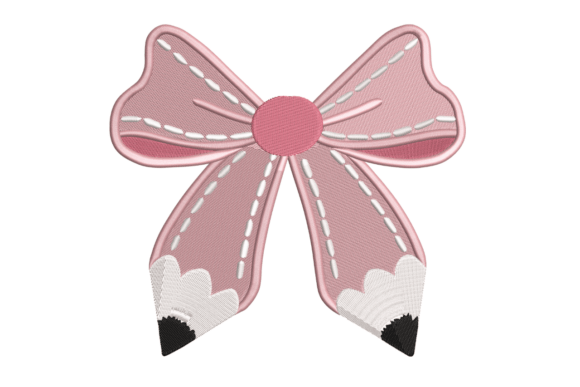
Opening a new machine embroidery design always comes with a quick flash of curiosity. With the Pencil Bow Applique, the first thing that struck me was how cleverly it bridges two visual worlds. You get the crisp, familiar silhouette of a pencil paired with the softness of a bow. It is not overly cutesy and it is not rigidly academic. The mood lands somewhere between playful and polished, which is a surprisingly useful sweet spot when you are thinking about finished products that need to appeal to both kids and adults.
The shape reads clearly even at a quick glance. That matters when you are stitching on items that people will see from across a craft fair table or in a small thumbnail on an Etsy listing. The bow element softens the pencil outline just enough to keep the design from feeling too literal or flat. I could immediately picture it on a dozen different blanks in my studio. The linework has personality without being fussy, and that is exactly what you want when you are evaluating a digital embroidery file for real-world use.
When a Back-to-School Tote Bag Became the Perfect Test
Last week I was prepping a small batch of custom canvas tote bags for a client who runs a boutique teacher gift shop. She needed something that felt handmade but still looked intentional and professional. The Pencil Bow Applique came to mind instantly. I loaded the embroidery file onto my machine, hooped a medium-weight natural cotton canvas with a medium-weight cutaway stabilizer, and ran a test stitch on a scrap first.
The applique portion stitched out cleanly. The placement stitch outlined the pencil shape without unnecessary underlay bulk, and the tack-down stitch held the fabric piece securely before the satin stitch border sealed everything in place. I chose a golden yellow cotton for the pencil body, a soft pink for the bow, and a charcoal gray for the outline and detail lines. The contrast popped beautifully against the natural tote bag fabric. After trimming and pressing, the tote looked like a premium handmade product ready for a shop shelf. The client ordered twelve more the same day she saw the sample photo.
How the Stitching Actually Behaves Under the Needle
Experienced embroiderers know that a pretty preview image does not always translate to a smooth stitch-out. With the Pencil Bow Applique, the stitch sequence felt logical and well-planned. The running stitch placement lines were precise enough to guide fabric positioning without piercing the applique material too densely. The satin stitch border had a consistent width around the pencil edges, and I did not notice any awkward angle shifts that sometimes cause thread breaks or puckering on tighter curves.
The bow detail uses a combination of fill stitch and satin outlining that gives it a slight dimensional lift. On a flat cotton canvas, that subtle texture adds a lot of perceived value. The stitch density felt balanced. It was dense enough to provide solid coverage but not so heavy that the fabric underneath became stiff or uncomfortable. I tested it on a medium-weight sweatshirt as well, and the design held up nicely with a soft cutaway stabilizer. The stitch density did not cause tunneling or pulling on the knit fabric, which is always a relief when you are working on custom apparel.
Where This Design Truly Earns Its Keep
If you are an Etsy seller or a craft business owner, you need designs that flex across multiple product categories. The Pencil Bow Applique does that well. It feels right at home on tote bag design projects, but it also translates beautifully to smaller items like zipper pouches, notebook covers, and pencil cases. The theme naturally fits the School category, yet it is not so strictly seasonal that it disappears from relevance after September.
I have also seen it used effectively on baby embroidery pieces, particularly on onesies and bibs for shower gifts. The pencil and bow combination reads as celebratory and milestone-oriented, which makes it a lovely choice for first-day-of-school photos or kindergarten graduation keepsakes. For holiday embroidery projects, swapping the thread colors to red and green or pastel spring tones can shift the design into a completely different seasonal context. That kind of versatility matters when you are building a product line and want to keep your design assets working across multiple months.
Fabrics and Surfaces That Demand a Little Extra Thought
No design is universally foolproof, and the Pencil Bow Applique has a few surface considerations worth noting. The pencil tip includes a pointed detail that, while charming, requires careful hooping on stretchy fabric. On a thin cotton jersey t-shirt, I recommend using a fusible mesh stabilizer and a topper to prevent the point from distorting during the satin stitch passes. The design is not overly complex, but those small angled corners can shift slightly if the fabric is not fully supported.
Dark fabric also warrants a test run. The applique method means you are layering a separate piece of fabric onto the base material, so the contrast is usually strong. But if you choose a dark pencil body on a dark background, the bow detail can lose some of its visual separation. I always test the design in a black-and-white mockup before committing to thread colors. A printable mockup version of the design helps visualize contrast issues before you waste materials. On curved surfaces like caps, the design fits best on the front panel area where the curve is gentler. Avoid placing it too close to a cap brim seam, as the applique edges can struggle to lay flat on a tight radius.
The Visual Punch and Why Customers Notice It
There is something about the Pencil Bow Applique that stops a scroll. When I posted the finished tote bag on social media, the engagement was noticeably higher than my average project post. Part of that is the applique design itself. Applique has a tactile, handcrafted quality that flat Embroidery designs do not always achieve. The fabric-on-fabric texture signals quality and care to a buyer. It makes a personalized gift feel more substantial.
From a brand consistency standpoint, this design is easy to adapt. You can match the applique fabric to your shop's signature color palette. You can keep the thread colors neutral or go bold. The recognizable pencil shape builds instant recognition, and the bow detail adds a touch of warmth that keeps the design from feeling generic. For small shop product photography, the design photographs well because the applique fabric creates natural depth and shadow. That is a subtle but real advantage when you are trying to build buyer trust through product images.
Practical Notes from Someone Who Has Already Made the Mistakes
I have learned through enough ruined blanks to share a few specific recommendations for anyone using the Pencil Bow Applique in a commercial embroidery context. First, always run a test stitch on the exact fabric combination you plan to sell. The design file itself is well-digitized, but your stabilizer choice, thread tension, and applique fabric thickness will all affect the final outcome. I keep a notebook with my tested combinations so I can replicate results consistently.
Second, check your hoop size before you commit. If the design is too close to the hoop edge, you risk the presser foot bumping the frame on dense satin sections. Give yourself at least an inch of clearance on all sides. Third, review the thread colors under natural and artificial light. A color that looks perfectly matched on the spool can read differently once stitched onto textured fabric. Fourth, confirm the licensing terms before you sell finished items. Not all digital embroidery file purchases include commercial use rights, and you do not want to build a product line around a design you cannot legally sell. The product description states this design is perfect for embroidery projects and handmade gifts, but always verify the specifics of the license before listing products.
Small Details That Make a Big Difference in the Finished Product
When I inspect a stitched-out embroidered patch or applique piece, I look closely at the corners and transition points. The Pencil Bow Applique has a few detail areas worth examining. The junction where the bow meets the pencil body is a narrow pinch point. In my tests, the satin stitch navigated this area cleanly without gaps or overlapping density spikes. The eraser end of the pencil is squared off rather than rounded, which gives the design a slightly more modern, graphic feel. That square edge also makes it easier to align the applique fabric during placement.
The overall footprint of the design is compact enough to work on smaller items like baby embroidery bibs or pocket corners, yet substantial enough to hold its own as a center-chest design on a sweatshirt embroidery project. If you are creating design assets for a product line, this size versatility is a practical advantage. One design file can serve multiple product categories without requiring extensive resizing or re-digitizing.
Thinking Like a Seller, Not Just a Stitcher
As someone who both makes and sells embroidered goods, I evaluate every design through a dual lens. Will it stitch efficiently? And will it sell? The Pencil Bow Applique passes both tests. The stitch time is reasonable for an applique design, which means your production cost per item stays manageable. The visual appeal is broad enough to attract teachers, parents, students, and anyone shopping for a thoughtful personalized gift. The School connection gives it a natural marketing angle, but the design is not so narrowly themed that it limits your audience.
For craft fair products, this design works well on items that shoppers can immediately connect to a recipient. A tote bag with a pencil bow applique sells faster than a generic floral tote because it tells a story. The buyer sees it and thinks of a teacher, a student, a classroom volunteer, or a proud parent. That emotional recognition drives purchasing decisions. In an Etsy seller environment, designs that create a clear mental picture of the end recipient tend to perform better in search and conversion.
Wrapping Up at the Embroidery Table
After multiple test runs on different fabrics and for different project types, the Pencil Bow Applique has earned a permanent spot in my digital design library. It stitches reliably, reads clearly, and adapts to a wide range of handmade product ideas. Whether you are making a single keepsake gift or producing a batch of inventory for a small shop product launch, this design delivers a polished result that feels intentional and well-crafted.
My honest advice is to treat this design as a foundation piece. Experiment with your applique fabric choices, play with contrasting thread colors, and test it on the specific blanks you plan to use. The difference between a good finished product and a great one often comes down to those small, thoughtful adjustments. The Pencil Bow Applique gives you a strong starting point, and from there, your own creative instincts can take it somewhere truly special.