Because We Know Teachers Really Prefer Grapes
The Instant Appeal of a Teacher-Themed Punchline
Every craft fair season, I rummage through my digital embroidery library hunting for designs that will stop a shopper mid-stride. The moment I saw Because We Know Teachers Really Prefer Grapes, I knew it had that magnetic quality. It’s playful without being childish, funny without being obscure, and it taps into the universal teacher appreciation market with a wink. The phrase itself is a clever twist on the tired old apple trope—teachers prefer grapes, who knew?—and that little bit of surprise is exactly what makes a handmade product sell. You can almost hear the chuckle from a customer picking it up. In a sea of generic “Best Teacher Ever” mugs and monogrammed totes, this design brings a fresh, whimsical personality that feels modern and giftable.
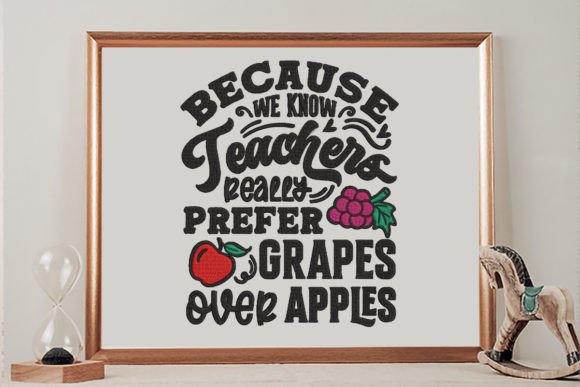
Visually, I imagine the embroidery file combining bouncy, friendly lettering with a small cluster of grapes or perhaps a grapevine accent. The description promises a “cool” and “fun and whimsical accent,” so I’d expect a lighthearted layout that’s as charming on a kitchen towel as it is on a child’s backpack. It’s not trying to be elegant or rustic—it’s leaning into cute, humorous territory, and that’s a sweet spot for craft fair products. This is a design that will make people smile, and a smiling customer is already halfway to a purchase.
Where This Design Shines at a Craft Fair Booth
When I consider my weekend booth setup, I picture Because We Know Teachers Really Prefer Grapes on a tiered display of tea towels, a stack of canvas tote bags, and a row of aprons clipped to a wire rack. The design’s lightheartedness makes it incredibly versatile within the broad School niche, but it doesn’t scream “classroom” so loudly that it can’t live in a kitchen or a home office. It’s a teacher appreciation design that doubles as a general foodie or humorous home decor piece. That crossover appeal is gold for a small shop owner.
From a shopper’s perspective, the text is easy to read at a glance, which is critical when someone is walking past a booth. The message lands instantly. Even if the grape illustration is simplified, the word “grapes” anchors the joke. I’ve learned that designs with a clear punchline create a quick emotional connection—people either laugh, smile, or think of a specific teacher in their life. That mental association is what turns a browser into a buyer.
Product Spotlight: Tote Bags, Tea Towels, and Beyond
Let’s talk about the specific products where this embroidery design will truly perform. I’ve laid out my mental production lineup below, based on years of what sells at craft fairs and what makes for a high-quality finished product.
- Canvas Tote Bags: A medium-sized tote in natural or cream cotton with the design centered boldly. It’s functional, reusable, and instantly recognizable as a teacher appreciation gift. The flat surface is forgiving for stitch detail, and the design can be a focal point without competing with seams or zippers.
- Tea Towels: A flour sack or linen-blend towel with the design near the bottom hem or corner. This is a quick, high-margin product. The humor of grapes on a kitchen towel is not lost on anyone—it’s a subtle nod to the joke while being a genuinely useful item.
- Aprons: A bib apron with the design placed on the upper chest or the pocket area. This turns a practical item into a charming gift for a teacher who loves to cook, or a playful addition to a school bake sale. The larger printable area is ideal for the design if it has a bit of width.
- Embroidered Patches: A small, standalone patch on felt or twill backing. Patches are a huge trend right now for jackets, tote bags, and lanyards. If the design includes very tiny lettering, this is where I’d test the stitch density carefully—more on that later.
- Zipper Pouches: A small canvas or cotton pouch with the design on the front. These are perfect for countertop impulse buys. They’re quick to produce and easy to batch, and the compact size works well if the design is created as a smaller accent piece.
- Pillow Covers: A linen or cotton cover with the design centered. It’s a cozy, decorative item that broadens the appeal to home decor shoppers. If the grape motif is detailed, a larger 8x8 or wider hoop gives you room to show it off.
- Baseball Caps: I’d approach caps with caution. The curved surface can distort lettering, and small grape details might get lost. A simplified version or a cap-specific placement using a strong adhesive stabilizer and a curved hoop is a must. I’d likely reserve this for a single sample piece rather than bulk production.
The Nitty-Gritty: Stitch Quality and Production Realities
As a designer, I’m always looking at the technical side before I commit to a full production run. Because We Know Teachers Really Prefer Grapes has a lot going for it, but I’d pour a strong cup of coffee and run a few test stitch-outs on scrap fabric before loading my booth inventory.
The most critical area will be the lettering. If the text is small and contains delicate serifs or thin strokes, it could disappear on textured fabrics like waffle weave towels or thick canvas. I’d want to verify that the embroidery file uses a clean, readable font with a stitch density that holds up on both light and dark backgrounds. On dark fabric, light thread colors often require a slightly higher density or an underlay to prevent the background from peeking through.
The grape illustration—if it exists—could be a dense, satin-stitched cluster or a more open, sketchy style. Dense grape areas might cause puckering on lightweight fabrics if I don’t use the right stabilizer. For tea towels, a medium-weight cutaway stabilizer is my go-to. For tote bags, a tear-away with a light fusible backing often works. I’ll always test on the exact fabric I plan to sell, because machine embroidery has a funny way of behaving differently on a 100% cotton canvas versus a polyester blend cap.
Small lettering is the bane of many embroidery designs. If the phrase includes a tiny “we know” or a small tagline, I need to check the minimum stitch length and whether the letters close up. On a curved cap surface, that risk multiplies. I’d produce one sample cap and inspect it under natural light and from a typical shopper’s distance—about three feet. If the text blurs or the grapes look like a blob, I’ll either skip caps or resize the design to a larger placement.
Photographing Your Finished Products for Online Sales
Even if I’m selling primarily at a craft fair, I know that a good chunk of my customers will find me on Etsy or Instagram first. Because We Know Teachers Really Prefer Grapes photographs beautifully on a flat lay with a few fresh grapes scattered nearby or a rustic wooden tray. The design’s humor translates well to a styled shot. I’d create a printable mockup of the tote bag for my Etsy listing, using a clean, bright image that lets the embroidery pop. The contrast between the thread color and the fabric is key—I’d test a couple of thread colors: a deep purple or green for the grapes, and a charcoal or black for the text. If the design comes in a single color, I’d play with a vibrant tone that reads well in a thumbnail.
For booth display, I’ll hang a tea towel at eye level with a small card that says “Teacher Appreciation Gift” and a price tag. The visual clarity of the design means shoppers don’t need to squint. They smile, they read it, they pick it up. That’s a winning sequence.
Batch Production and Price Point Considerations
From a production standpoint, this design is a dream for efficient batch work. The message is universal enough that I can stitch ten tea towels in a single afternoon without worrying about personalization. The design balances well as both a focal point and a smaller accent—I can adjust the size to fit a pocket or a tote bag center without losing the joke. The repeatability is high, and that’s crucial for a craft fair where I need to replenish stock quickly.
The price point will depend on the product. A tea towel with this design might sell for $15–$18, a tote bag for $22–$28, and a patch for $7–$10. The perceived value comes from the uniqueness of the humor and the quality of the stitch-out. I’ll always include a small care tag with washing instructions, which adds a professional touch that customers appreciate.
A Designer’s Checklist Before You Thread the Needle
Before I commit a single yard of fabric to production, I run through a mental checklist that has saved me from countless embroidery disasters. If you’re a craft fair seller, an Etsy shop owner, or a boutique maker, use this for Because We Know Teachers Really Prefer Grapes:
- Test stitch on scrap fabric. I always use the exact fabric I’ll sell. A cotton twill tote behaves differently than a linen tea towel.
- Check thread contrast. If the design uses dark thread on a dark fabric, the joke disappears. I’ll test a few combinations and see which pops.
- Review lettering spacing. Small text can close up. I’ll look for any letters that merge and adjust the embroidery file settings if my software allows.
- Confirm hoop size. The product description doesn’t specify a hoop size, so I’ll check the file requirements before loading it. I’ll make sure my largest hoop can handle the design comfortably, leaving room for the fabric to be hooped without distortion.
- Inspect stitch density. Dense grape clusters can feel bulletproof. I’ll run a finger over the finished stitch-out to ensure it’s not too stiff or prone to cracking after washing.
- Choose the right stabilizer. Cutaway for knits, tear-away for wovens, and a water-soluble topper for towels or textured fabrics. I’ll do a test wash to confirm the stabilizer doesn’t show through.
- Create at least one real mockup. A digital mockup is great for Etsy, but a physical sample tells me the true story. I’ll make one finished tote bag, photograph it, and live with it for a day.
- Compare fabric colors. A grape design might look gorgeous on a pale lavender towel, but I’ll try it on ivory, natural, and even a soft yellow to see which sells best.
- Confirm commercial licensing. The description says this is a machine embroidery design, but it’s crucial to check the digital embroidery file’s license terms. I only sell finished products from files that explicitly allow commercial use for handmade items. Always verify before you list.
What This Design Brings to Your Booth and Your Brand
At the end of the day, Because We Know Teachers Really Prefer Grapes is more than a punchline. It’s a design that adds a playful, charming layer to any handmade product line. It boosts customer engagement by sparking conversation—people will stop and say, “That’s so true, my mom is a teacher and she loves grapes!” It builds brand consistency if you’re known for witty, food-themed or school-related embroidery. It upgrades the perceived value of a simple tea towel or tote by making it feel personal and specific. And it’s a design that photographs well, stitches out reliably when you’ve done your homework, and fits effortlessly into a booth display alongside other giftable items.
I’d place a few of these finished products right at the front of my table, beside a small chalkboard that reads “Teacher Gifts That Actually Make Them Smile.” The grape motif is a conversation starter, and the message is a gentle reminder that teachers are people with favorite snacks, not just classroom heroes. That human touch is what sells handmade goods. I’m already picturing the stack of tea towels dwindling by noon.